
Description
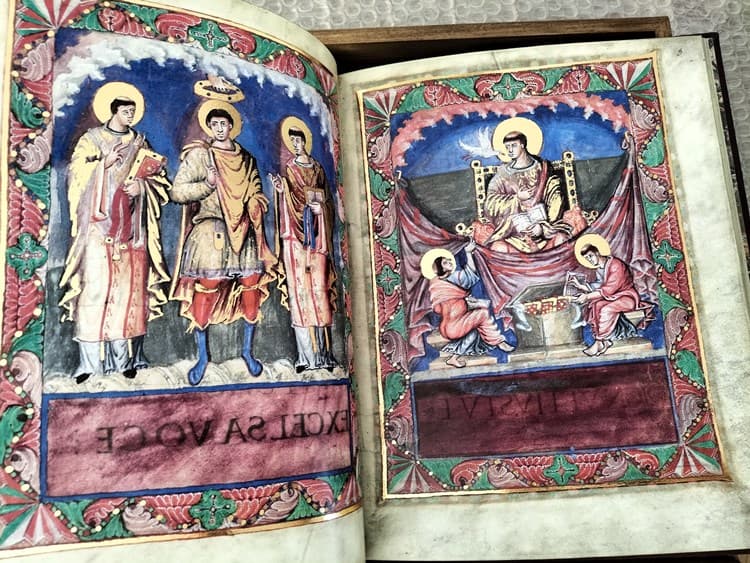
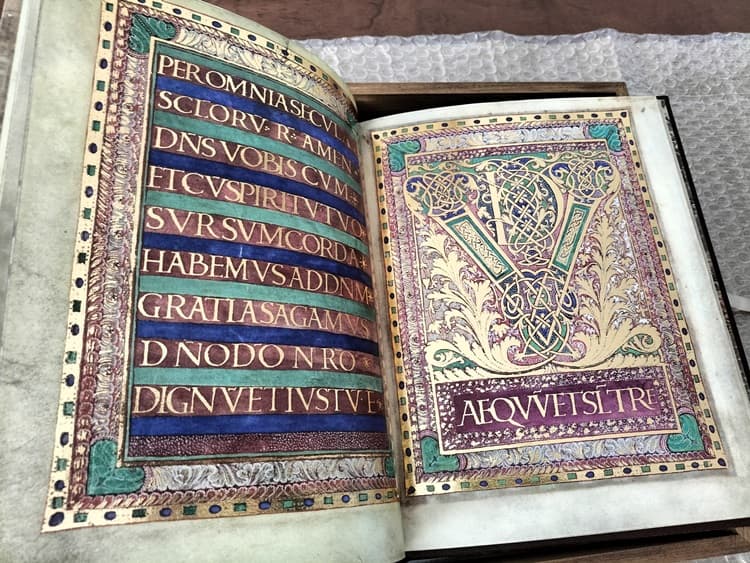
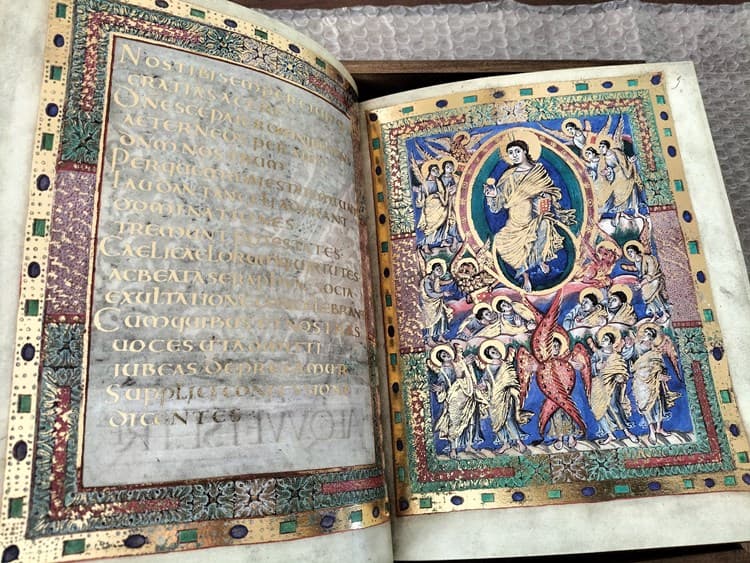
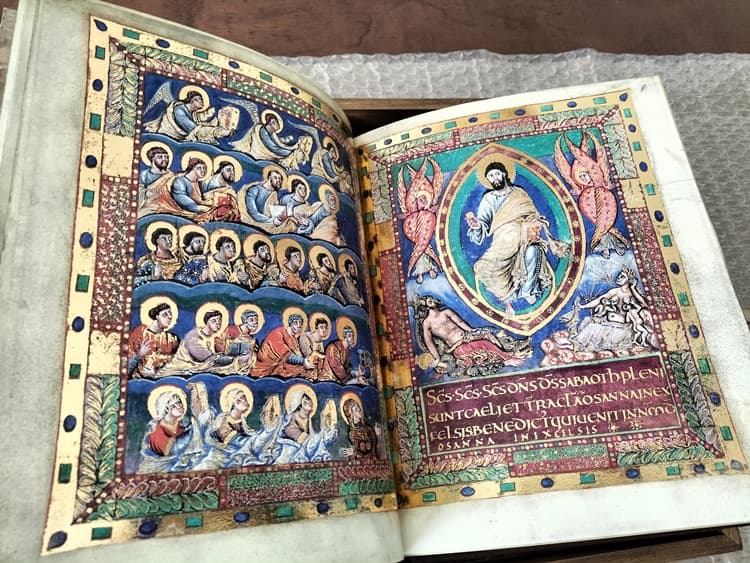
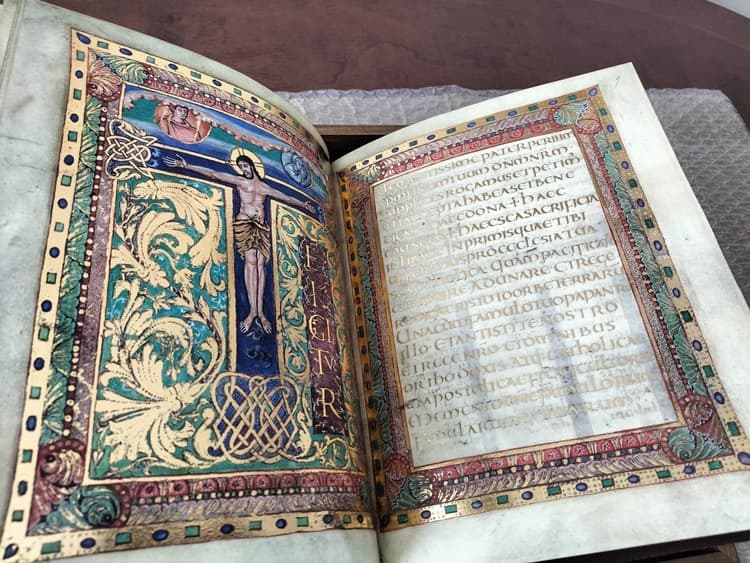
2022 facsimile edition of the Latin manuscript 1141 from the National Library of France, “Sacramentary of Charles the Bald,” from the 9th century (ca. 869-870). A masterpiece of Carolingian art.
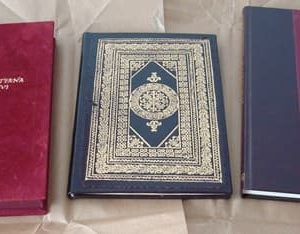
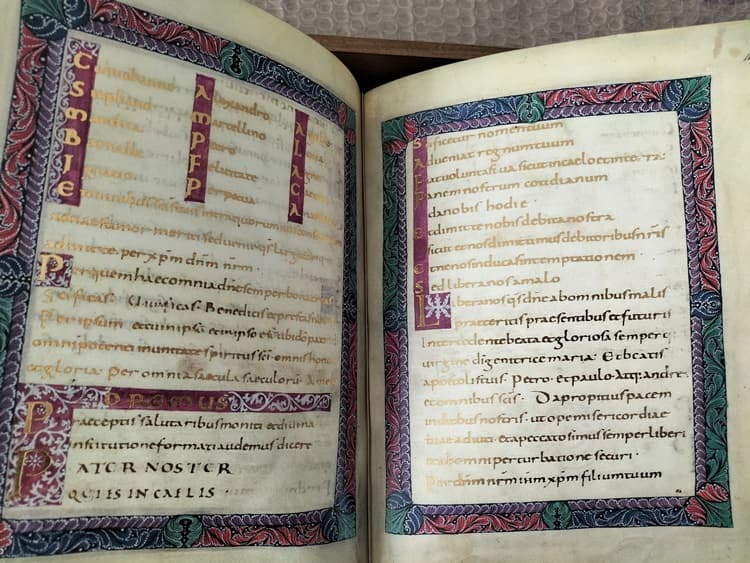
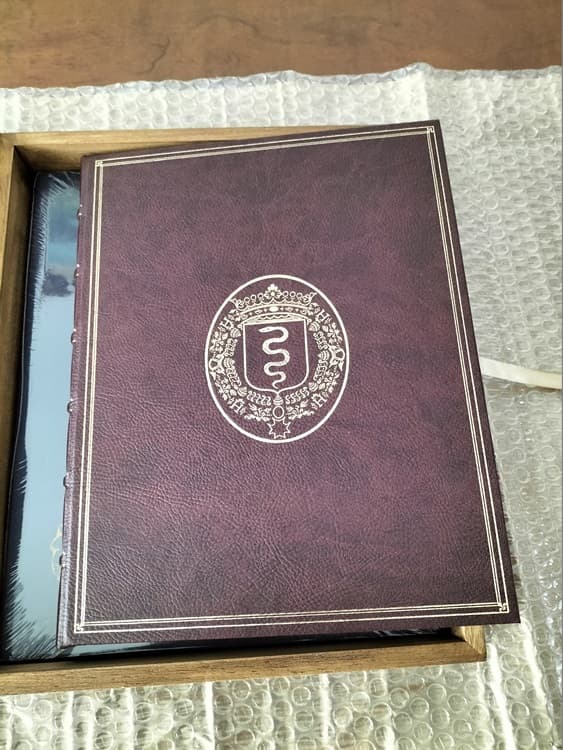
Facsimile bound in garnet leather with gilt lettering and raised bands, 22 x 28 cm. 22 beautifully and richly illuminated pages in gold ink with large miniatures, plus 20 blank pages. Written in Latin and produced in France.
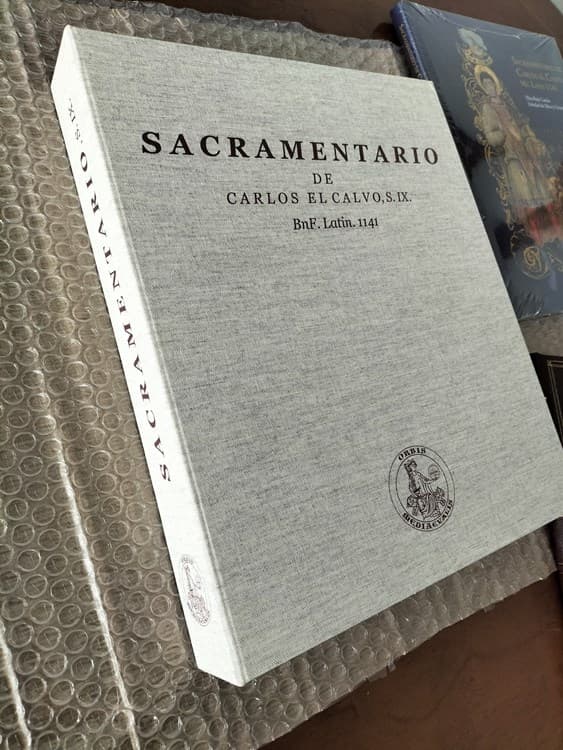
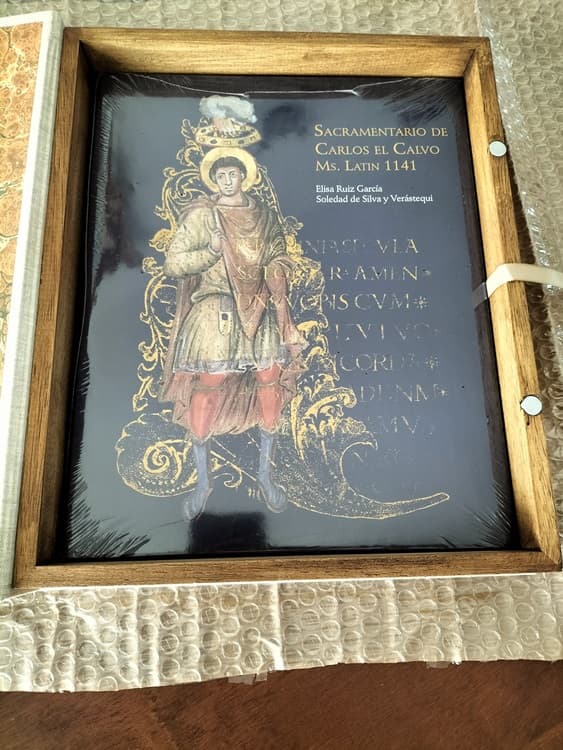
Includes a hardcover study book with illustrated dust jacket and ribbon bookmark. 23 x 28.7 cm. Texts by Elisa Ruiz García and Soledad de Silva y Verástequi.
Both are presented in a slipcase of wood and illustrated cloth, 26.5 x 32 x 5 cm.
Limited edition of 505 copies, without Roman numerals, and authenticated with a notarized certificate. Copy in perfect condition, new, unused.
During the Carolingian dynasty, the arts and literature experienced unprecedented development. The emperors maintained libraries and collected manuscripts that were as rare as they were precious, richly illuminated and of extraordinary luxury.
The Sacramentary is a liturgical book that compiles the prayers, formulas, and rites performed by the officiant during the sacraments. The copy belonging to Charles the Bald (840-877), King of the West Franks, crowned the fifth Carolingian emperor in 875, and currently held in the National Library of France, is an incomplete manuscript that was probably commissioned by him for his coronation as King of Lotharingia. It was produced around 869-870 by the court school of Charles the Bald, likely in Metz.
The splendor of Charlemagne’s court school is re-emerged in the works created by his grandson, Charles the Bald. The motifs of the images, developed in Reims and Metz from forms of late antiquity, are reborn; once again the Tours school, long since ruined by the Norman invasions, projects its splendor onto the pages of the Carolingian codices. A mature, perfectly developed art flourishes, encompassing all that was produced in the ninth century during the “Carolingian Renaissance.” The types of images, as well as the themes of representations created, will influence the art of the Middle Ages for centuries.
The extraordinary sumptuousness of the miniatures that decorate the pages of this Sacramentary is found no other manuscript from the Court school, and moreover, it has no parallel in all of Carolingian art. Even in the illumination of subsequent centuries, the canon of the Mass appears only rarely as luxuriously and richly illustrated with splendid creations as in this masterpiece.
The paintings that decorate this exceptional manuscript are characterized by a superb depiction of movement, combined with the monumentality of its compositions. It is distinguished by its lavish decoration, inspired by motifs from antiquity and the exquisite contemporary work of goldsmithing.
Its gold ink writing stands out, with gilded initials that pop against purple backgrounds. It is a magnificent example of the graphic masterpieces that emerged from the school of the Court of Charles the Bald, born from the combination of different scripts used decoratively, following the example of the great calligraphers of Tours and Metz.
The sumptuousness of this codex makes it one of the most prized examples of illuminated manuscripts from the High Middle Ages, as well as a masterpiece of Carolingian art.
Free shipping for this item. Ask us any questions you may have, indicating the article reference.