Description
An extraordinary and luxurious facsimile edition of manuscript Ricc. 453 from the Riccardiana Library in Florence, Le Leggende di Santa Margherita e Sant’Agnese (The Legends of Saint Margaret and Saint Agnes).
The legend of the lives of these two saints, inspired by the models of Byzantine martyrs, shares many points of contact: both women dedicated themselves to God and were the object of the attention of the powerful, and upon refusing their advances, were subjected to horrific tortures. Miraculous events attest to their sanctity after their deaths.
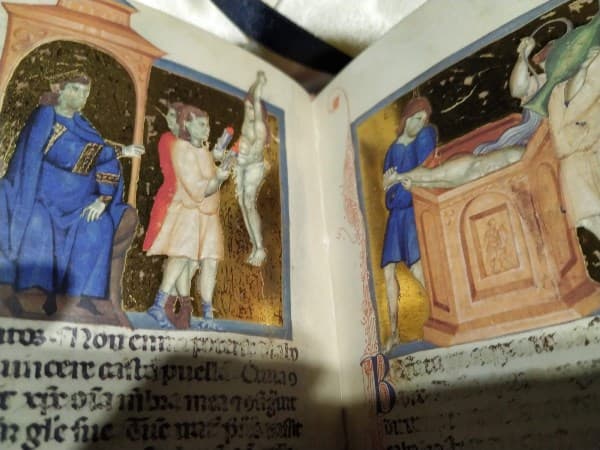
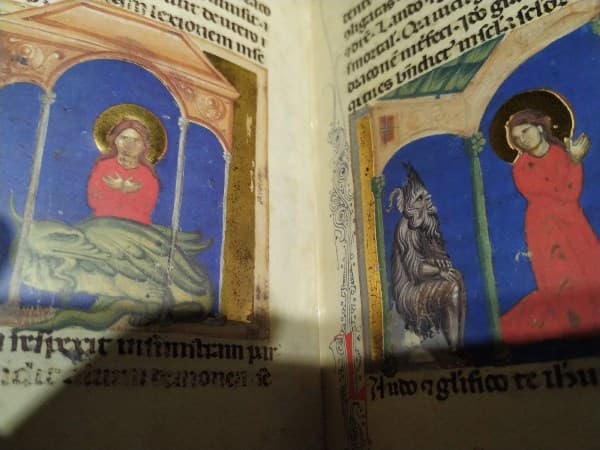
The Riccardiana manuscript comprises two sections, probably joined at the beginning of the 14th century; only the Passion narrative of Margaret of Antioch is illustrated with illuminated images that stand out as a visual commentary on the text, marking its most significant moments with a rhythm faithful to the events.
The codex contains the richest ornamental ensemble of the legend, a refined account certainly intended for someone very powerful. Produced in Bologna at the end of the 13th century in a workshop specializing in luxury volumes, whose clientele included sovereigns and high prelates, this manuscript, despite its small size, is a high-quality work.
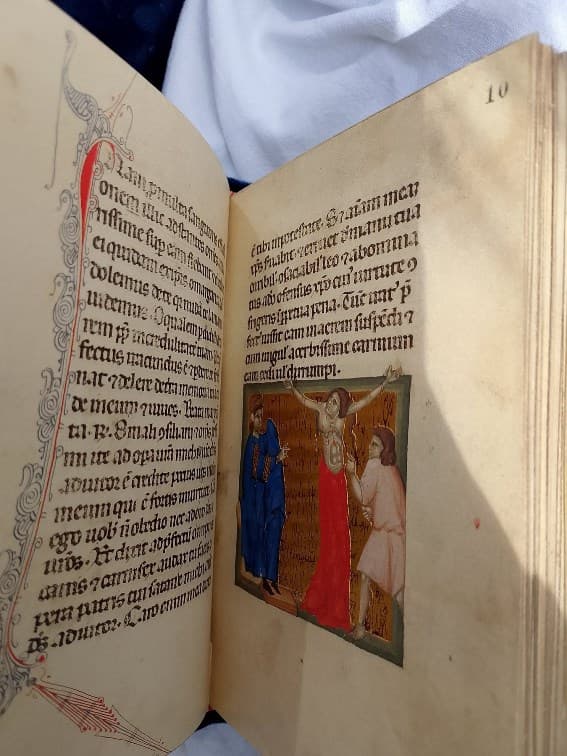
Elegantly crafted filigree lettering marks the text, and 33 miniatures, along with two figurative initials, provide a beautiful visual commentary. The scenes, rendered with imagery typical of the oldest codices and rich in classical allusions, are enclosed in frames that define them, isolating them on the page and lending them the prominence and significance of the stories in the large painted panels dedicated to the celebration of saints. Against a background of gold leaf, the figures move lightly and gracefully amidst understated touches of landscape and architecture, in a sophisticated style that blends Byzantine culture with a solid classical structure, revealing the hand of a great master, the expert director of the whole.
The hypothesis that the manuscript is linked to the figure of Blessed Margaret, daughter of King Béla IV of Hungary, is highly suggestive. Miraculously, at her birth, the Mongols, who had invaded the country and forced the sovereigns to take refuge in Dalmatia, withdrew, and the court, with the infant, was able to return to Budapest. On the island that would bear her name, in the middle of the Danube, Margaret became a Dominican nun and lived in faith, even receiving the stigmata.
Facsimile characteristics: Complete reproduction in 23-karat gold on parchment paper of Codex 453 from the Riccardiana Library.
Volume dimensions: 10.3 x 14.5 cm. 122 pages, of which 15 are blank, with 33 full-page miniatures.
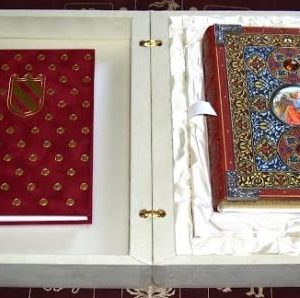
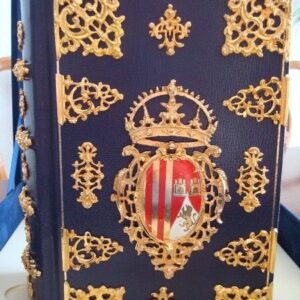
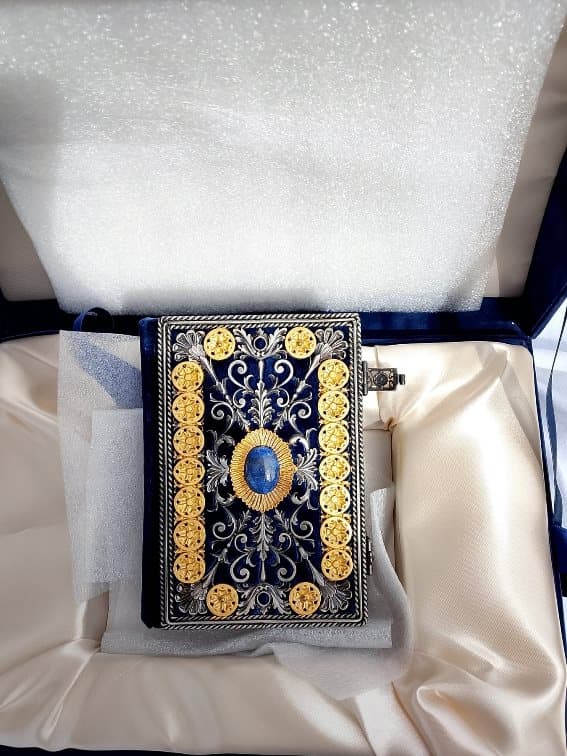
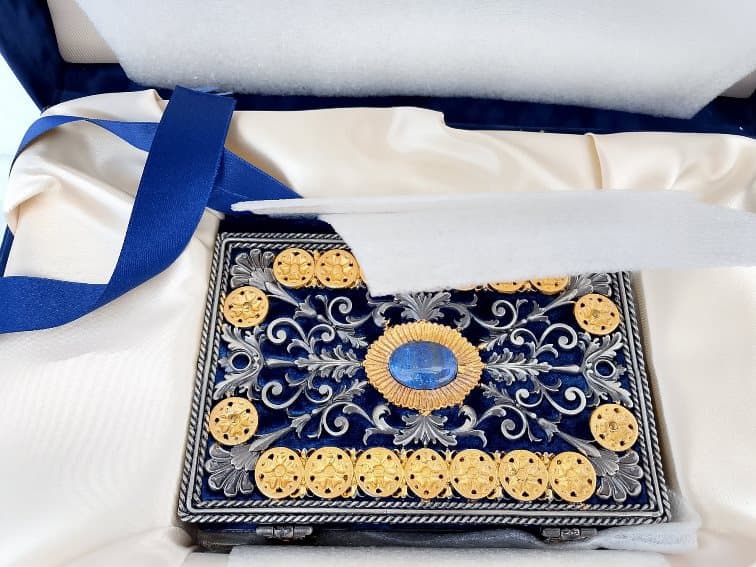
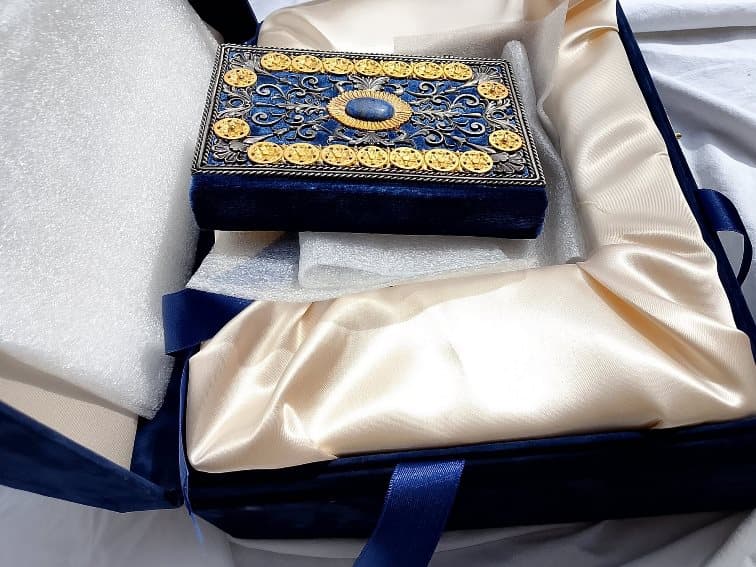
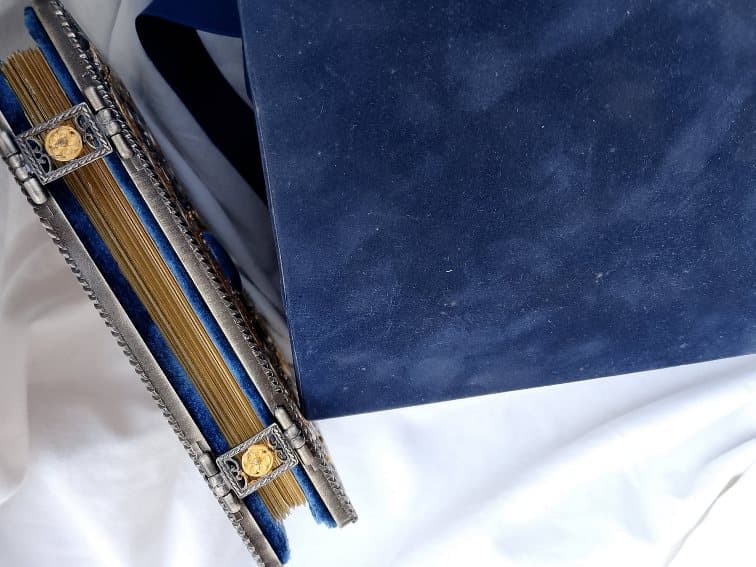
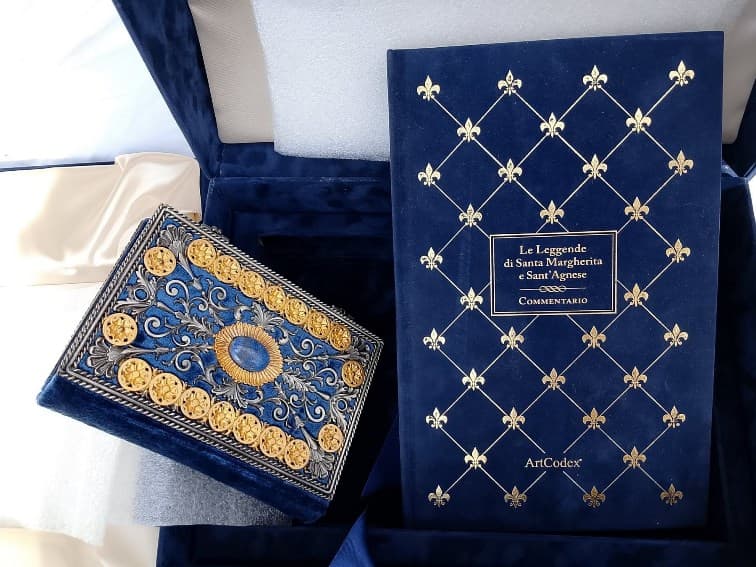
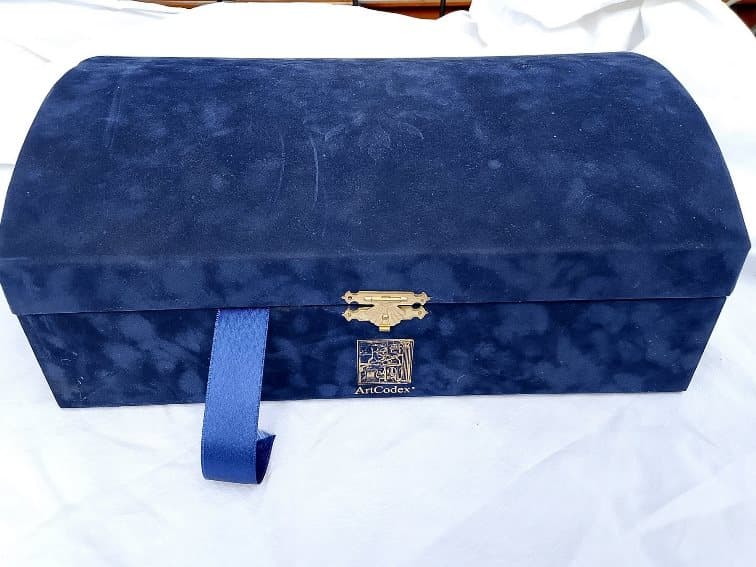
Entirely handmade binding, blue silk velvet slipcase, gilt and silver-plated metal plates, natural lapis lazuli on the frontispiece.
Limited edition of 999 numbered and certified copies.
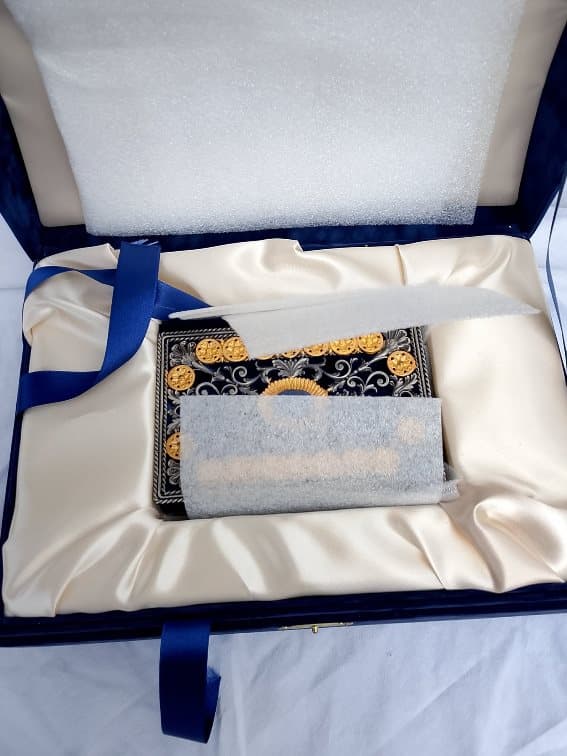
The work is presented in a beautiful blue box with two compartments and rests on an elegant champagne-colored satin interior.
108-page commentary volume by Giovanna Lazzi, director of the Biblioteca Riccardiana in Florence. Texts in Italian.
The gilt decoration, applied using a patented system, appears in relief as in the original codex, as if weathered by time. Every detail is faithfully reproduced, from burin work to gilt designs, from gold dust applied with a brush to gold leaf: the splendid effect achieved is a harmonious chromatic fusion between gilt details and the brilliant iconographic elements of the miniatures. The gold leaf is applied with 23-karat gold.
The binding process is carried out using the methods of traditional artisanal binders. The work, performed in workshops that still maintain the old hand press, involves the hand-sewing of the headbands and leaves, strictly adhering to the page profiles of the manuscript. Finally, the title page is reproduced in facsimile, strictly following all the characteristics of the original: each step is done by hand, respecting the condition of the codex and using period materials.
The type of parchment paper used, whose unique properties ensure that each sheet is identical to the original, Pergamena paper, after an “aging” treatment, recreates the same effect of movement that the passage of time has wrought on the original. The parchment’s color is faithfully reproduced in the printing phase: every sign of age, such as folds, stains, and transparencies, is reproduced exactly, helping to give the codex the same sense of antiquity that characterizes the medieval manuscript.
Complete copy. A jewel of the highest bibliophile caliber to enrich your library or to give as an exceptional gift to a loved one.
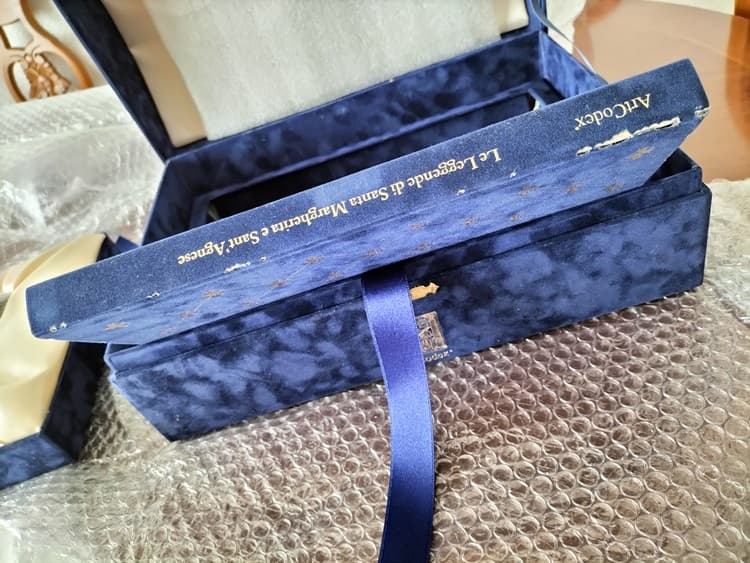
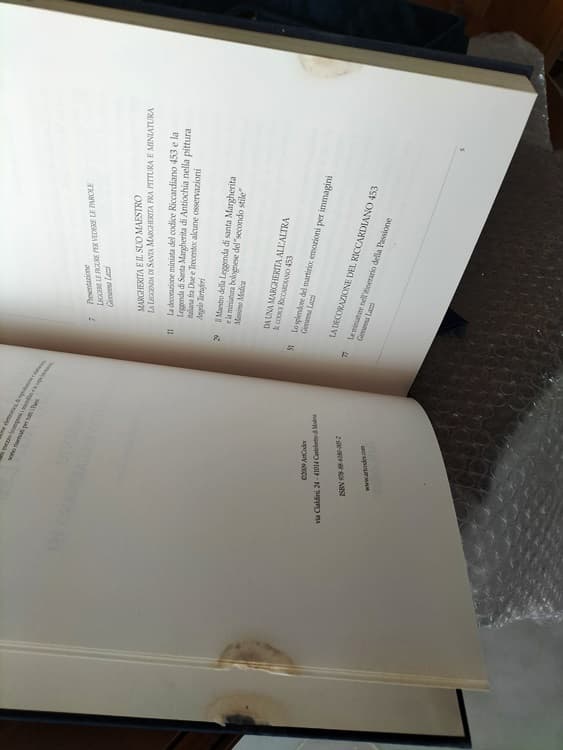
The copy we have available and are offering has a facsimile in perfect condition, but the study volume shows some minor damage to the back of the binding and a slight damp stain on the first 11 pages; the rest of the book is in perfect condition. Therefore, we are offering an exceptionally low price for such a magnificent work.
Free shipping on this item. Consult us any questions, indicating the article reference.