Description
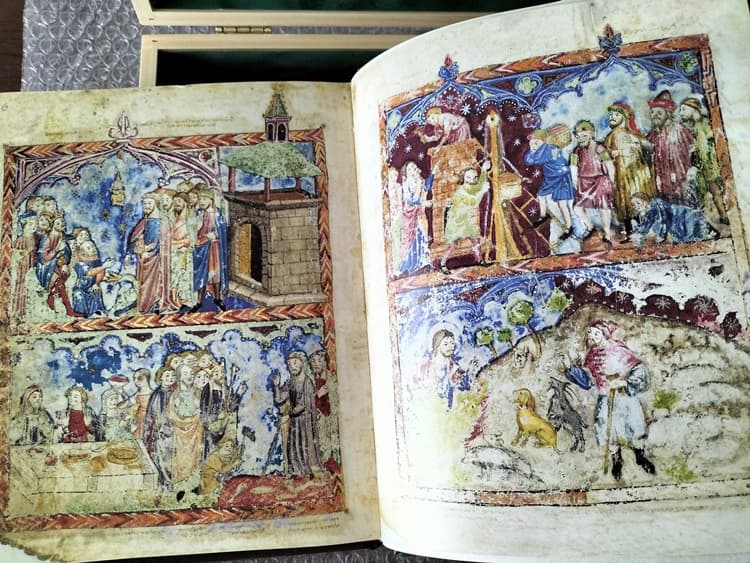
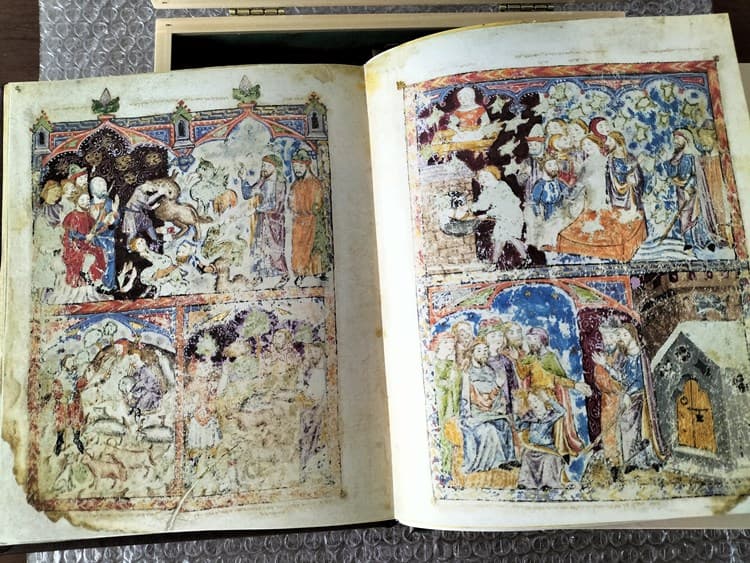
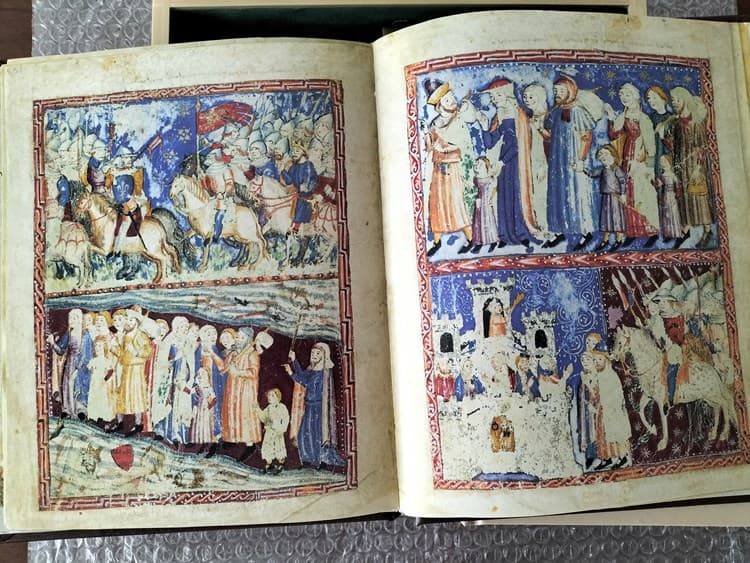
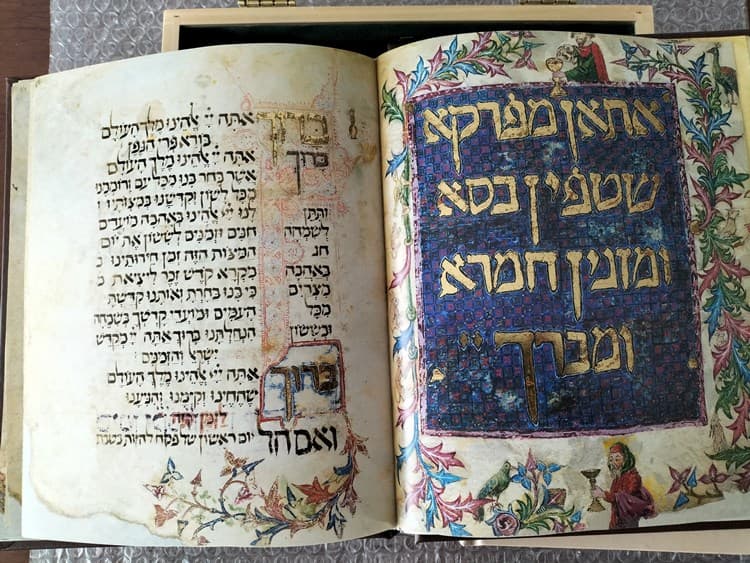
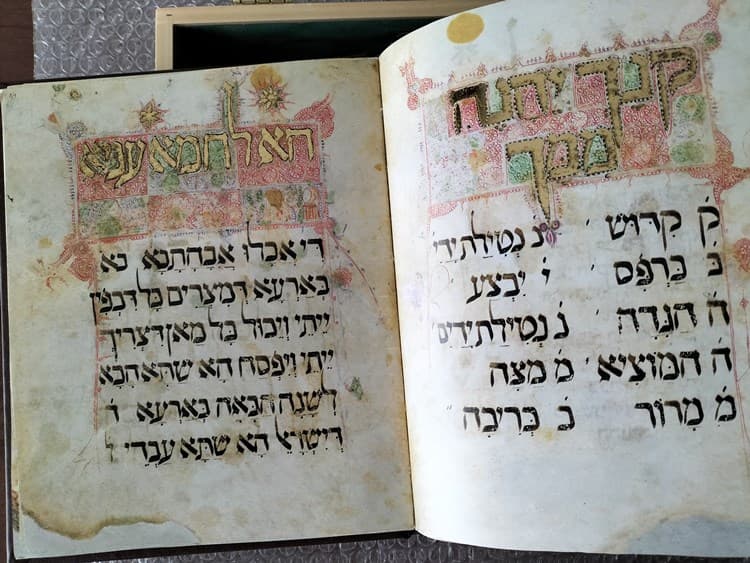
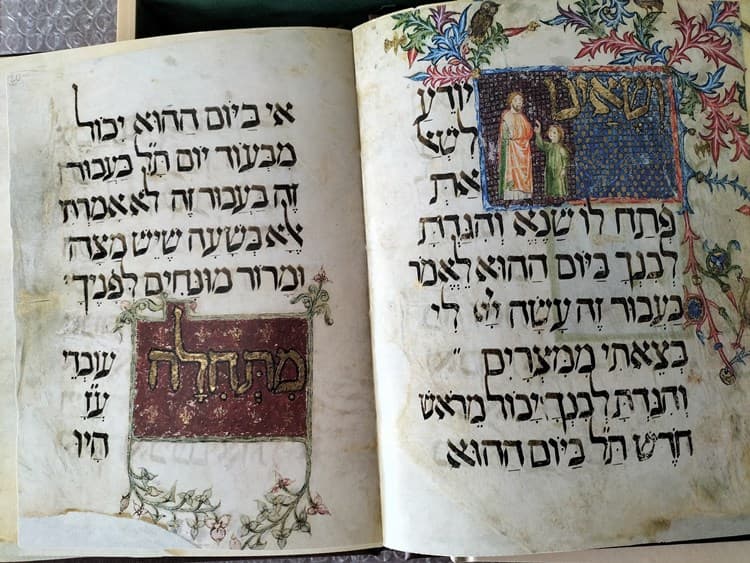
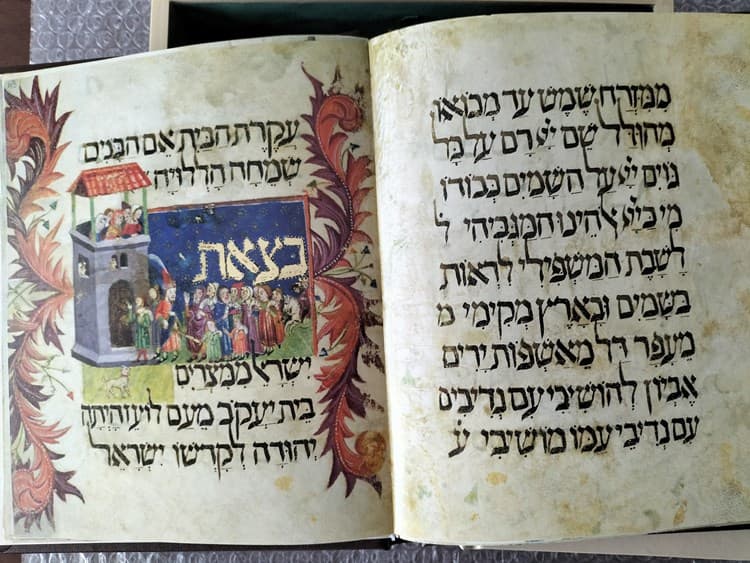
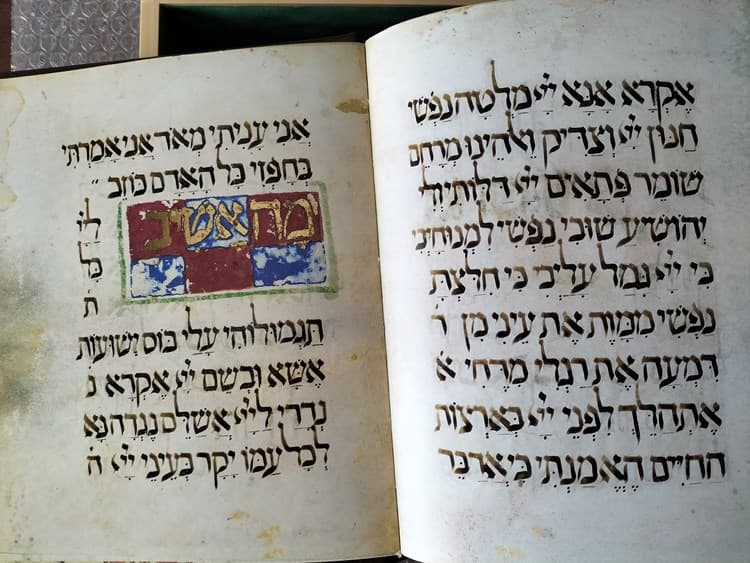
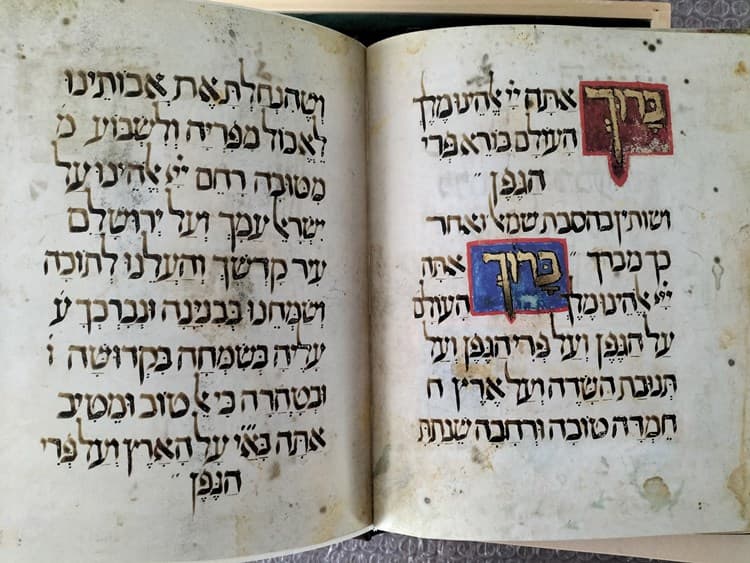
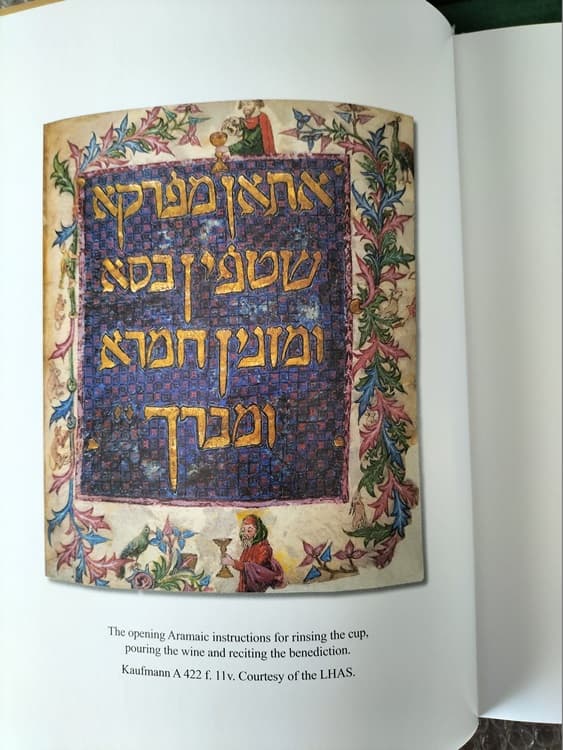
The Kaufmann Haggadah, created in 14th-century Spain and now held in the Oriental Collection of the Library and Information Center of the Hungarian Academy of Sciences (Budapest), is one of the most vivid surviving testimonies of medieval Sephardic Jewish culture. The manuscript is particularly notable for its full-page narrative miniatures depicting the story of the Exodus, followed by a richly illuminated Haggadah text.
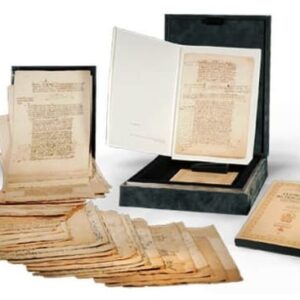
This facsimile edition was published in 2025 by the Library of the Hungarian Academy of Sciences, numbered and limited to 400 copies. The edition is distinguished by its adherence to the original page order, reconstructed by researchers, presenting the narrative miniatures before the text, as in the original manuscript. Particular attention was paid to material and visual authenticity.
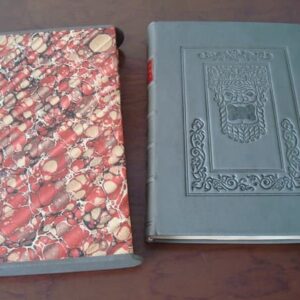
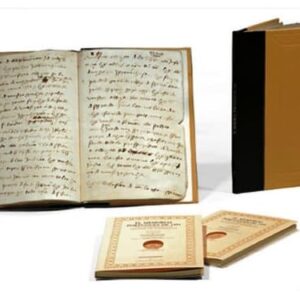
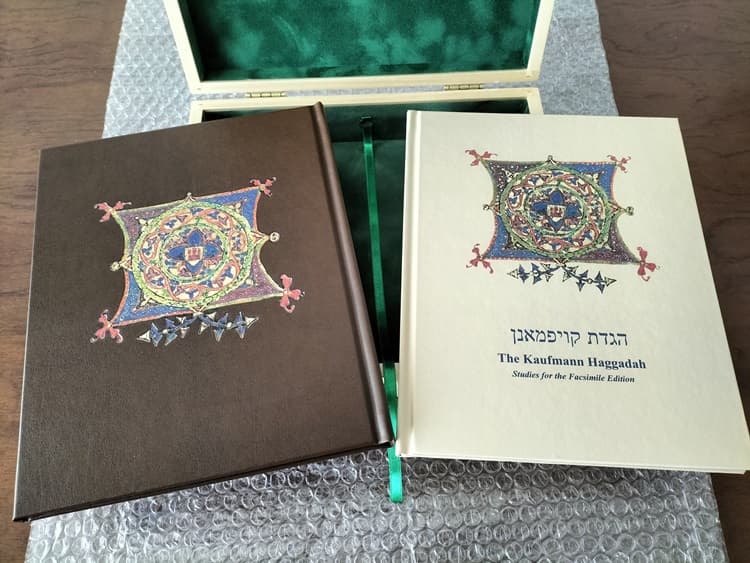
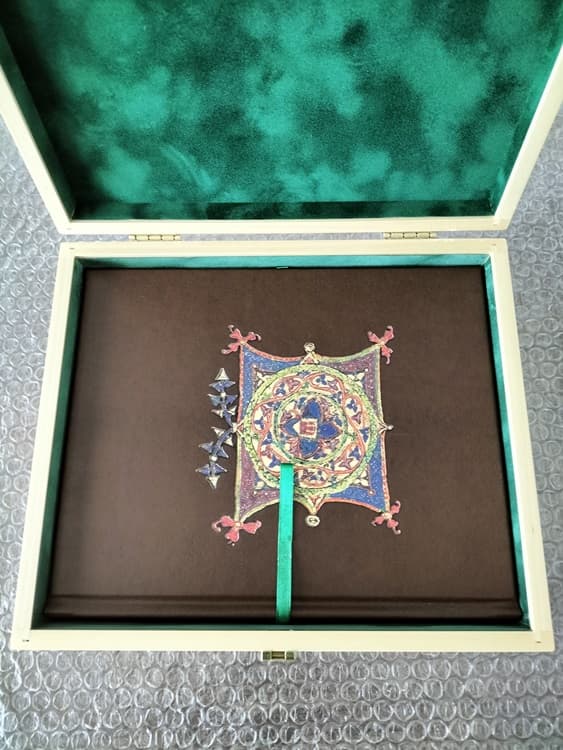
Leather-bound facsimile with gilt illustrations, 19.7 x 24 cm. 120 pages, corresponding to the complete manuscript, full-page miniatures preceding the text, cold-applied gilt technology reproducing the original illumination with exceptional fidelity.
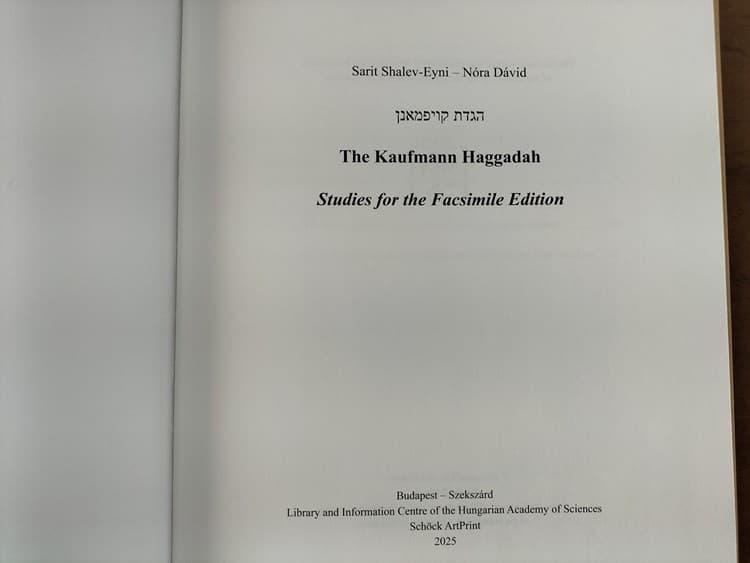
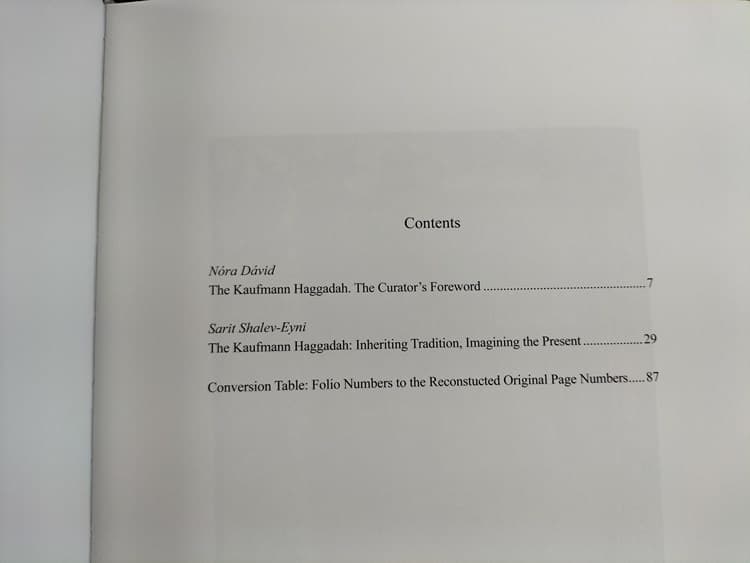
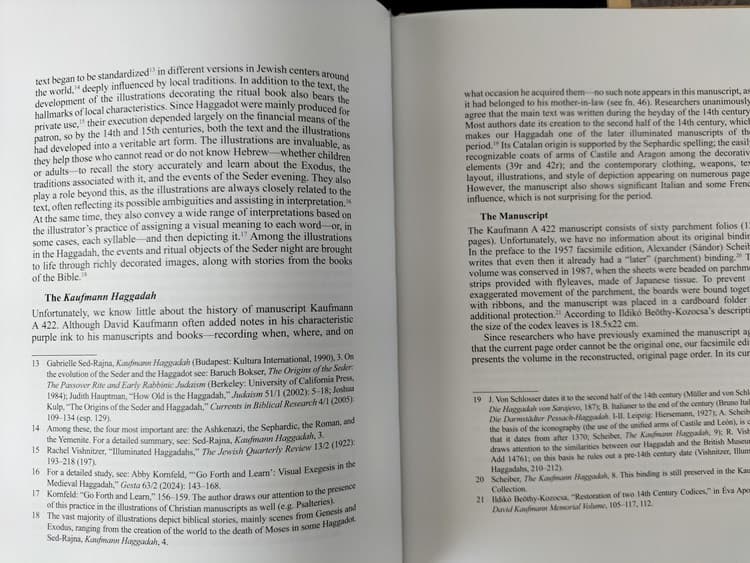
The facsimile is accompanied by a separate study volume with English texts and Hebrew paragraphs (ISBN 9786156792198), hardbound with an illustrated gilt illustration, 19 x 23.7 cm. 88 pages. Authors: Sarit Shalev-Eyni (Professor of Jewish Art, Department of Art History, Tel Aviv University) and Nora David (Associate Professor, Department of Ancient History, University of Szeged).
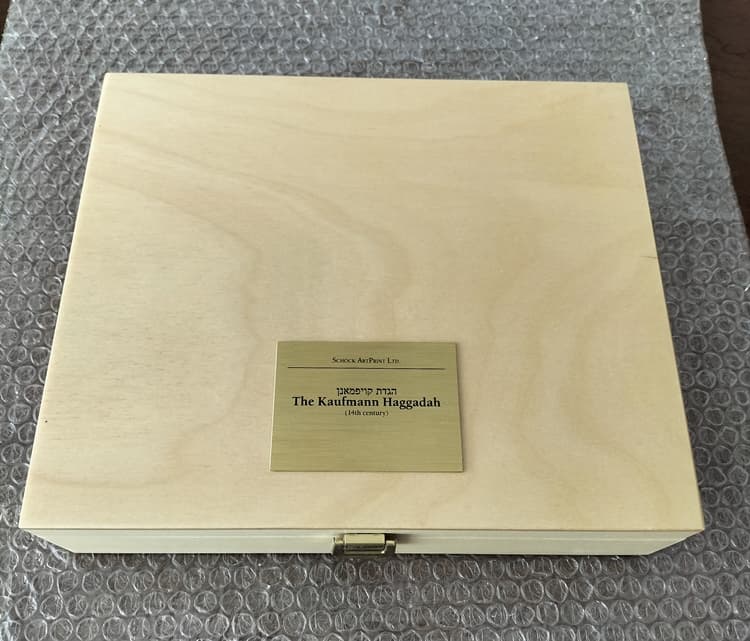
Both books are presented in a beautiful wooden box, 26 x 22 x 6.5 cm, lined inside with fine green velvet. The cover includes a gold-plated metal plaque with the title of the work and the copy number. We can also personalize it with the owner’s name, but in this case, delivery would be delayed by a few days. Please contact us if you are interested in this detail, at no extra cost.
Professor Nóra Dávid summarizes the importance of the manuscript and this edition:
“The Haggadah is one of the most popular religious books in Judaism, narrating the story of the Exodus from Egypt, supplemented with blessings, songs, and prayers. The head of the family reads it during the ritual Seder meal on the eve of Passover. As the children sitting around ask about the origins of the holiday, the story comes alive through the pages of the Haggadah.
These works have been very popular since the Middle Ages, and numerous richly illustrated and decorated copies have been produced. The Kaufmann Haggadah was created in Spain in the 14th century and is held in the Oriental Collection of the Library and Information Center of the Hungarian Academy of Sciences. It is named after David Kaufmann, the renowned scholar and professor at the Rabbinical Seminary in Budapest, and was donated to the Academy by his mother-in-law, Róza Gomperz, along with outstanding collections of manuscripts, early printed books, and fragments of the Genizah of El Cairo.
The Kaufmann Haggadah is one of the most vivid reminders of the flourishing Jewish culture of medieval Spain. This facsimile edition is unique, as it follows the original page order, reconstructed by researchers, presenting full-page miniatures that narrate the story of the Exodus, followed by the richly illustrated text of the Haggadah.
The facsimile reproduces the characteristics of the manuscript as faithfully as possible.”
“Perhaps the most famous manuscript in the Kaufmann Collection, housed in the Library of the Hungarian Academy of Sciences, is the codex marked A 422, known as the Kaufmann Haggadah. Originating from 14th-century Catalonia, this exquisitely illustrated volume contains the prayers, poems, and narrative passages recited during the Passover Seder, the family ritual held on the eve of Passover, the Jewish festival commemorating the Lord’s passing over and liberation from Egyptian slavery.
During the High and Late Middle Ages, especially between the 11th and 15th centuries, it was not uncommon for Haggadahs to be produced for private, domestic use. The Kaufmann Haggadah bears clear signs of this intimate commitment: its worn pages speak of a cherished family treasure, opened, displayed, and shared repeatedly. It is easy to imagine the head of the household proudly leafing through the pages for his children, not only on the designated Passover night but also on other occasions, gathering the family after dinner to marvel at the splendid and captivating illustrations.
Children occupy a central place in the Jewish Passover ritual, and what better way to awaken and nurture their imagination than with images of such vitality, mystery, and wonder? The Kaufmann Haggadah thus serves not only as a liturgical guide but also as a tool for memory, education, and emotional connection, linking generations through beauty and faith.
Beyond its religious significance, the manuscript is an invaluable testament to cultural history and is among the masterpieces of medieval Jewish art.”
Gabriella Séd-Rajna
Copy in perfect, new condition.
Free shipping for this item. Ask us without obligation (indicating the reference of the article) any doubt.